. Obre en una nova finestra.Logo gencat
Menú
  • Imatge usuariLog in. Obre en una nova finestra.
  • Imatge menúContact Us
  • Menú idioma Idioma: enfletxa cap avallfletxa cap avall
    • Castellano
    • Català
Cercador

EAPC repository

  • Home
  • About the repository
. Obre en una nova finestra.Logotip de la Generalitat

|EAPC repository

Imatge capçalera
  • Home 
  • Gestió i transferència del coneixement 
  • Informació especialitzada 
  • EAPC blog 
  • View Item 

View Item 

  • Share on Twitter
  • Share on Facebook
  • Share on Telegram
  • Share on WhatsApp
  • Print
JavaScript is disabled for your browser. Some features of this site may not work without it.

Effective leadership and emotional intelligence

Author: Humphrey, Ron
Publication date: 2017-05-23
URI: https://hdl.handle.net/20.500.14227/1819

 
Resum
There are many factors that influence employee’s job satisfaction. Pay, benefits, co-workers, location, the type of work done, even the room temperature can make a difference. However, leaders make a huge difference in whether employees like their jobs or not. As the adage states, employees don’t quit their jobs, they quit their bosses. A good leader can motivate employees to achieve outstanding results. A bad leader can do the reverse, and prompt dissatisfaction, mass turnover, poor performance, strikes, and even sabotage. We can draw upon our emotional intelligence to improve employees’ job satisfaction, task performance, and organizational citizenship behaviours. Research has provided solid evidence that emotional intelligence is important to both job satisfaction and leadership. The workplace can be a frustrating place. Problems both big and small crop up every day. When problems occur, employees may feel frustrated, demoralized, and downhearted. Leaders may also feel the effects of the work problems and be irritated. Naturally, leaders may sometimes take their frustrations out on their employees, which would make the employees even more frustrated and distracted, and unable to focus on their work tasks. Both subordinates and leaders can experience emotional hijacking, which occurs when our emotions overwhelm our rational thought processes, and we respond to events with anger, fear, or panic. Emotional intelligence helps leaders avoid emotional hijacking. Recognizing “trigger points” early on, before the emotional hijacking is well underway, is a key to remaining calm and in control.

Language
English
Extension
2 p.
Document Type
Others
ISSN
2938-530X
Publisher
Escola d'Administració Pública de Catalunya
Subject (CDU)
00 - Prolegomena. Fundamentals of knowledge and culture. Propaedeutics
070 - Newspapers. The Press. Journalism
316 - Sociology
65 - Communication and transport industries. Accountancy. Business management. Public relations
Related items
Apunt de blog disponible a:
Link to the related item
https://eapc.blog.gencat.cat/2017/05/23/effective-leadership-and-emotional-intelligence-ron-humphrey/
License
Attribution-NonCommercial-NoDerivatives 4.0 International
http://creativecommons.org/licenses/by-nc-nd/4.0/
Show full item record

Documents to download

20170523_Effective_emotional_intelligence_Humphrey_Ron.pdf

117.5Kb

Is part of
EAPC blog
Subject (LEMAC)
Blogs
Lideratge
Intel·ligència emocional
Gestió de conflictes
Altmetrics

Statistics
Views
...
Downloads
...
View full statistics

Recommended citation

Humphrey, Ron. (23 de maig de 2017). Effective leadership and emotional intelligence. EAPC blog. https://hdl.handle.net/20.500.14227/1819
This item appears in the following Collection(s)
  • EAPC blog [428]

Related Items

Displaying related items by Title and Subject.
  • Thumbnail

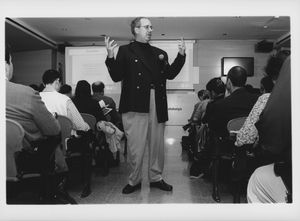
    Pla sencer del professor Richars Boyatzis recolzat al respatller d'una de les butaques de la sala on imparteix la seva conferència "Desenvolupar lideratge sense intel·ligència emocional és com ballar sense ritme", amb part dels assistents al fons 

    Salom, Lluís (2003-10-15)
  • Thumbnail

    Primer pla de perfil de Richard Boyatzis assenyalant algú del públic durant la seva conferència "Desenvolupar lideratge sense intel·ligència emocional és com ballar sense ritme" 

    Salom, Lluís (2003-10-15)
  • Thumbnail

    Pla sencer de Richard E. Boyatzis i part del públic assistent a la conferència "Desenvolupar lideratge sense intel·ligència emocional és com ballar sense ritme" 

    Salom, Lluís (2003-10-15)

Browse

The entire repositoryBy communities & collectionsBy AuthorBy TitleBy Document typeBy SubjectBy Issue DateThis CollectionBy AuthorBy TitleBy Document typeBy SubjectBy Issue Date

My Account

LoginRegister

Statistics

View Usage Statistics

Follow Public Administration School of Catalonia (EAPC)'s social networks:

  • Icona de Twitter
  • Icona de LinkedIn
  • Icona de Youtube
Logo generalitat
  • Legal notice
  • Accessibility
  • Cookies policy
  • Web map