Inicia sessió
 Contacte





Mostra el registre parcial de l'element
Basque as a threat, Spanish as a victim: the delegitimisation of linguistic rights through language making
| dc.contributor.author | Breda, Karolin | |
| dc.contributor.author | Krämer, Philipp | |
| dc.date.accessioned | 2025-12-03T13:17:42Z | |
| dc.date.available | 2025-12-03T13:17:42Z | |
| dc.date.issued | 2022-05-12 | |
| dc.identifier.citation | Breda, Karolin i KrÄmer, Philipp. (12 de maig de 2022). Basque as a threat, Spanish as a victim: the delegitimisation of linguistic rights through language making . RLD Blog. https://hdl.handle.net/20.500.14227/5377 | ca |
| dc.identifier.issn | 2696-8908 | ca |
| dc.identifier.uri | https://hdl.handle.net/20.500.14227/5377 | |
| dc.description.abstract | Delegitimising positions towards regional languages in Spain have long been part of discourses on bilingualism and linguistic rights. Especially when laws are passed in the autonomous regions that are intended to preserve and promote language rights on the part of the minority, such positions usually become particularly visible in political debates and public media. It is not surprising, then, that the decree for the normalisation of the use of both co-official languages in Basque institutions (179/2019 Dekretua) introduced in November 2019, aiming to guarantee the linguistic rights in the local administration, received extensive media coverage on a regional and Spain-wide level, and sparked vivid public debates about its consequences not only for the use of Basque but also for that of Castilian in the region. There were also indignant reactions from right-wing parties and organisations which perceive it as a serious threat to the hegemonic position of Castilian. Defendants of the latter often resort to arguments based on a rhetoric of “reverse discrimination” (DePalma/Teasley 2013, p.113), which goes hand in hand with a conception of language rights as individual rights that are being threatened as soon as any measures in favor of the minority language require a certain degree of accommodation from monolingual speakers of the majority language. A very striking example are the efforts of NGOs such as Hablamos Español (“We speak Spanish”), which invoke the right conferred by the constitution to lead a fully monolingual life in Spanish even in the autonomous regions. | ca |
| dc.format.extent | 5 p. | ca |
| dc.language.iso | eng | ca |
| dc.publisher | Escola d’Administració Pública de Catalunya | ca |
| dc.relation | Apunt de blog disponible a: | ca |
| dc.relation.ispartof | RLD blog | ca |
| dc.relation.uri | https://eapc-rld.blog.gencat.cat/2022/05/12/basque-as-a-threat-spanish-as-a-victim-the-delegitimisation-of-linguistic-rights-through-language-making-karolin-breda-and-philipp-kramer/ | ca |
| dc.rights | Attribution 4.0 International | * |
| dc.rights.uri | http://creativecommons.org/licenses/by/4.0/ | * |
| dc.title | Basque as a threat, Spanish as a victim: the delegitimisation of linguistic rights through language making | ca |
| dc.type | info:eu-repo/semantics/other | ca |
| dc.rights.accessLevel | info:eu-repo/semantics/openAccess | |
| dc.embargo.terms | cap | ca |
| dc.subject.udc | 00 | ca |
| dc.subject.udc | 070 | ca |
| dc.subject.udc | 34 | ca |
| dc.subject.udc | 81 | ca |
| dc.subject.lemac | Blogs | ca |
| dc.subject.lemac | Basc | ca |
| dc.subject.lemac | Drets lingüistics | ca |
| dc.subject.lemac | Bilingüisme | ca |
Fitxers en aquest element

Aquest element apareix en la col·lecció o col·leccions següent(s)
-
RLD blog [463]

Excepte que s'indiqui una altra cosa, la llicència de l'ítem es descriu com http://creativecommons.org/licenses/by/4.0/
Ítems relacionats
Mostrant ítems relacionats per Títol i Matèria.
-
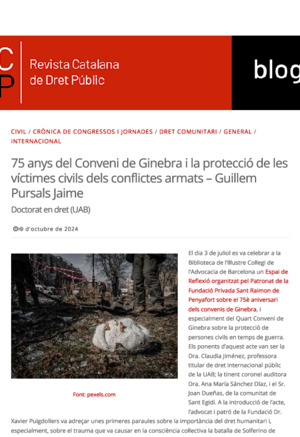
75 anys del Conveni de Ginebra i la protecció de les víctimes civils dels conflictes armats
(RCDP blog, 2024-10-09)El dia 3 de juliol es va celebrar a la Biblioteca de l’Il·lustre Col·legi de l’Advocacia de Barcelona un Espai de Reflexió organitzat pel Patronat de la Fundació Privada Sant Raimon de Penyafort sobre ... -
Els efectes socioeconòmics del coneixement de llengües i de les polítiques lingüístiques a Catalunya
(RLD blog, 2024-04-04)El passat 15 de març vaig tenir ocasió de donar a conèixer els resultats de la meva recerca sobre l’economia de la llengua per al cas de Catalunya en el marc de la XV Jornada sobre l’Ús del Català a la ... -
Europe’s leading language activist organisation set to meet in Valencia
(RLD blog, 2014-05-22)Europe’s leading regional or minority language organisation, the European Language Equality Network, will be holding its Steering Committee meeting in Valencia on Saturday May 24th The meeting will ...Le Réseau Européen pour l’Egalité des Langues, principale coordination européenne pour les langues régionales ou minoritaires, tiendra son prochain Conseil d’Administration à Valence le samedi 24 ...